Asian Cuisine: A Guide to Asia’s Regional Foods and Flavors

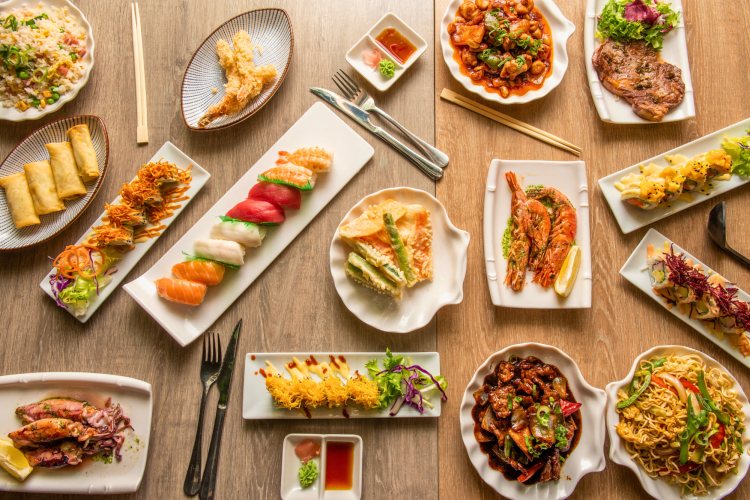
Few food terms are broader than “Asian cuisine.” Asia stretches from Turkey in the west to Japan in the east and from the Arctic Circle to the tropical islands of Indonesia, encompassing an extraordinary range of food cultures. The label can therefore describe everything from Lebanese mezze to Japanese sashimi, as well as countless regional cooking traditions shaped by geography, climate, trade, migration, religion and locally available ingredients.
An exhaustive overview of Asian cuisines could fill an encyclopedia. This guide instead introduces the basics: the major culinary regions of Asia, representative dishes and recurring cooking methods, plus what people mean by “pan-Asian” and “Asian fusion.” Consider it a starting point for exploring Asia’s cuisines in greater depth.
- What Is Asian Cuisine?
- Types of Asian Cuisine by Region
- Popular Asian Foods by Type
- What Is Pan-Asian Cuisine?
- FAQs About Asian Cuisines
What Is Asian Cuisine?
Asian cuisine is an umbrella term for the many food traditions that developed across Asia. It can't be reduced to one set of ingredients or techniques: cuisines across the continent have been shaped by local agriculture and waterways, trade routes, migration, climate, religious practices and cultural exchange.
To make this enormous subject easier to navigate, this article uses five broad culinary regions: East, Southeast, South, Central and West Asia. These groupings are useful rather than absolute, and individual countries often contain several distinct regional cuisines.
East Asian cuisines, including Chinese, Japanese and Korean food traditions, and Southeast Asian cuisines, such as Vietnamese and Thai, are often the traditions Americans first associate with Asian cuisine. South Asian cuisines from India and its neighbors are also widely recognized. Central Asian cuisines tend to be less familiar in the U.S., while West Asian cuisines are often marketed as Middle Eastern. “Mediterranean” overlaps with parts of West Asia but is not a synonym for the region. Together, these categories provide a practical framework for exploring the continent’s food cultures.
North Asian and Siberian food traditions fall outside the scope of this guide. Geographic and culinary classifications vary, especially in transcontinental regions such as Russia, Turkey and the Caucasus.
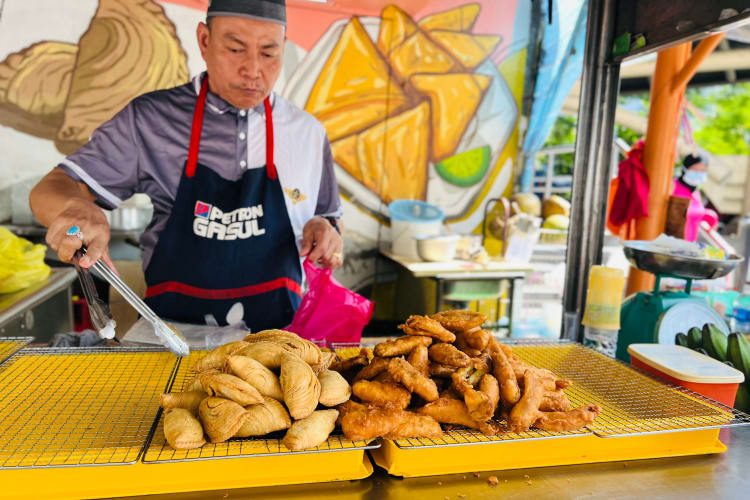
Types of Asian Cuisine by Region
Asian cuisine spans many distinct food cultures shaped by geography, climate, trade, religion and local ingredients. These five broad regions offer a useful starting point for understanding the continent’s major culinary traditions, although each includes considerable variation.
East Asian Cuisine
East Asian cuisine encompasses Chinese, Japanese, Korean, Mongolian and Taiwanese food traditions, among others. Familiar examples include dim sum, bubble tea, ramen and bibimbap. Across the region, ingredients such as rice, wheat noodles, soy products, vegetables, seafood and meat recur, while steaming, stir-frying, braising, grilling and fermentation appear in different forms. Their importance and preparation vary considerably from one cuisine to another.
Centuries of exchange have created some shared dish categories, including noodle soups, dumplings and fermented foods, but each cuisine retains distinct ingredients and traditions. Korean street food and Japanese street food, for example, offer very different snacks, seasonings and styles of service despite the countries’ proximity and colonial history.
Chinese cuisine makes the limits of broad regional labels especially clear. Cantonese, Sichuan, Hunan and northern Chinese traditions differ in their staple ingredients, seasonings and cooking methods, and each contains further local variations. Our guide to Chinese street food explores some of this variety, while our guide to the healthiest Chinese food examines lighter menu choices without treating Chinese cooking as a single style.
Southeast Asian Cuisine
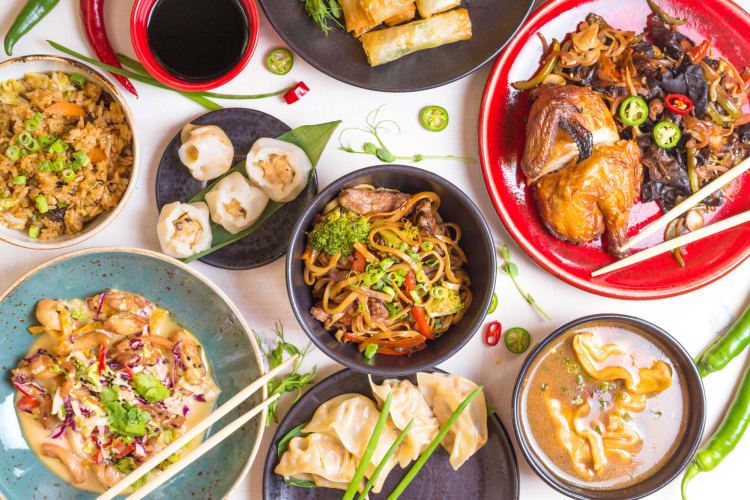
Southeast Asian cuisine encompasses the food traditions of Indonesia, Malaysia, Singapore, Cambodia, the Philippines, Laos, Myanmar, Vietnam, Thailand and neighboring countries. Our guide to Thai food covers one prominent example, but the region is far more varied. Rice, noodles, fresh herbs, fermented sauces, coconut and aromatic ingredients such as lemongrass and galangal recur in many cuisines, though they're combined in very different ways.
Pho, a noodle dish that was popularized in Hanoi, illustrates that variety: the Vietnamese noodle soup is made with an aromatic broth and is commonly served with beef or chicken. Thailand’s pad kra pao, by contrast, combines stir-fried minced meat with holy basil and chiles, usually served over rice with a fried egg. Both are everyday favorites, but their flavors and preparation are distinct.
Other representative dishes include Filipino adobo, in which meat or vegetables are braised with vinegar and seasonings, and laksa, a family of noodle soups found particularly in Malaysia and Singapore. Versions range from coconut-rich curry laksa to sour, tamarind-based asam laksa. Street food also plays a prominent role in many Southeast Asian cities, with specialties shaped by local ingredients and communities.

South Asian Cuisine
South Asian cuisine encompasses a wide range of food traditions from India, Pakistan, Bangladesh, Sri Lanka, Nepal, Bhutan and neighboring areas. These cuisines vary according to region, religion, climate and community, ranging from coastal dishes rich in seafood and coconut to wheat-based breads, rice dishes, lentil preparations and mountain foods. Our guide to Indian food offers a closer look at one of the region’s largest and most diverse culinary traditions.
Rather than dividing South Asian food into a simple north-versus-south contrast, it's more accurate to recognize its many coastal, inland, urban and rural traditions. However, regional guides can provide a helpful starting point. North Indian food frequently features wheat breads, dairy products, legumes and richly seasoned meat or vegetable dishes, while South Indian food is known for dishes made with rice, lentils, coconut, tamarind and fermented batters. These are still broad categories containing considerable local variation.
Recurring ingredients across South Asia include rice, wheat, millet, legumes, yogurt, ghee, coconut and spices, although none is universal. The region is also home to a wide variety of Indian bread, including naan, roti, paratha and puri. Other well-known dishes include biryani, prepared in many regional forms; momo, filled dumplings associated with Nepal and the Himalayan region; tandoori chicken; dosa, a fermented rice-and-lentil crepe associated with southern India; and kottu roti, a Sri Lankan dish of chopped flatbread stir-fried with vegetables, egg and sometimes meat.

Central Asian Cuisine
Central Asian cuisines reflect a combination of pastoral traditions, irrigated agriculture, oasis cities and centuries of exchange along the Silk Roads. The cuisines of Uzbekistan, Turkmenistan, Kazakhstan, Tajikistan and Kyrgyzstan often feature meat and dairy, but wheat, rice, fruit, vegetables and noodles are also important. Local climate and trade patterns have produced substantial variation across the region.
Plov, a seasoned rice dish often prepared with meat, carrots and onions, is especially associated with Uzbekistan but appears in regional variations. Lagman combines hand-pulled noodles with meat and vegetables, while shashlik consists of skewered grilled meat. Beshbarmak, associated particularly with Kazakhstan and Kyrgyzstan, pairs boiled meat with broad noodles. These dishes reflect both settled and pastoral food traditions rather than a single nomadic cuisine.

West Asian Cuisine
West Asian cuisine covers a broad and varied region that includes the Levant, the Arabian Peninsula, Turkey, Iran and the Caucasus. In the U.S., many of these traditions are grouped under “Middle Eastern,” a partly overlapping cultural term. “Mediterranean” overlaps with some coastal cuisines but also includes countries outside West Asia, so the labels are not interchangeable. Common ingredients across parts of the region include grains, legumes, yogurt, herbs, nuts, dried fruit, olive oil and grilled meats.
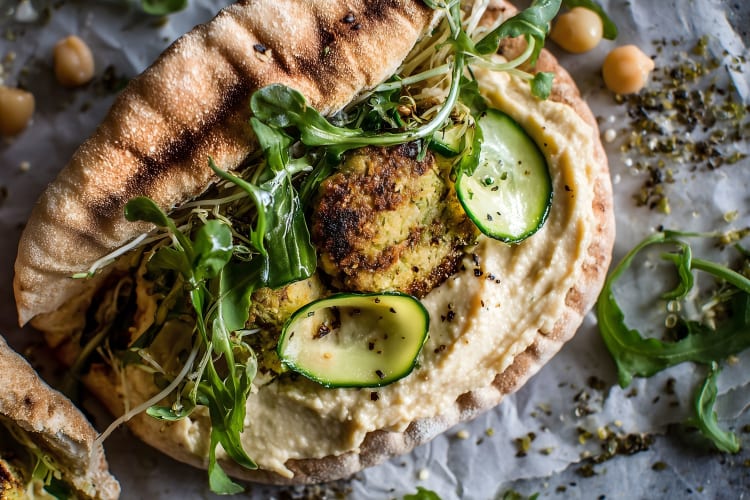
Representative foods include hummus, typically made from chickpeas and tahini, and falafel, which may be made with chickpeas, fava beans or a combination of both. Pilaf appears in many regional forms, while Persian cuisines are known for aromatic rice dishes and stews that may combine herbs, fruit, legumes and meat.
Important differences remain within this large region. Levantine cuisines are known for mezze and herb-forward dishes; Arabian Peninsula cuisines include many rice-and-meat preparations; Iranian cuisines feature distinctive rice techniques, stews and sour-sweet flavor combinations; and Caucasian traditions include stuffed vegetables and grape leaves, dumplings and breads such as khachapuri.
Popular Asian Foods by Type
Asian cuisines include an enormous range of noodles, rice dishes, dumplings, grilled foods, street snacks and desserts. The following categories highlight popular examples from across the continent and show how similar food formats can vary by region.
Noodles and Noodle Soups
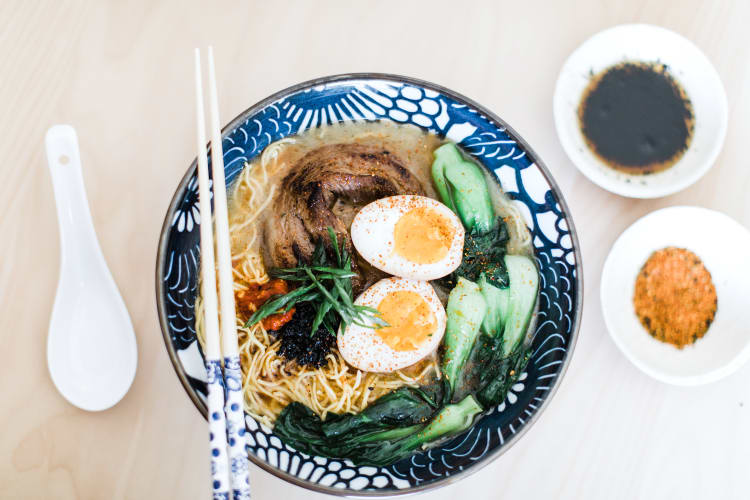
Noodles appear throughout many Asian cuisines in forms made from wheat, rice, buckwheat, sweet potato starch, mung bean starch and other ingredients. Familiar dishes include ramen, pho, soba, chow mein, pad Thai, lagman and laksa. They may be served in broths, stir-fries, salads or with sauces and toppings. Our guide to noodles vs. pasta explains some of the distinctions without suggesting that either category follows a single universal formula.
Rice Dishes
Rice is a staple across much of Asia, but varieties and preparation methods differ. Examples include pilaf in West and Central Asia, nasi goreng in Southeast Asia, biryani in South Asia and short- or medium-grain rice used for Japanese sushi and Korean kimbap. Rice may be the main element, as in Uzbek plov or Hainanese chicken rice, or an accompaniment to a larger meal.
Dumplings, Buns and Stuffed Breads
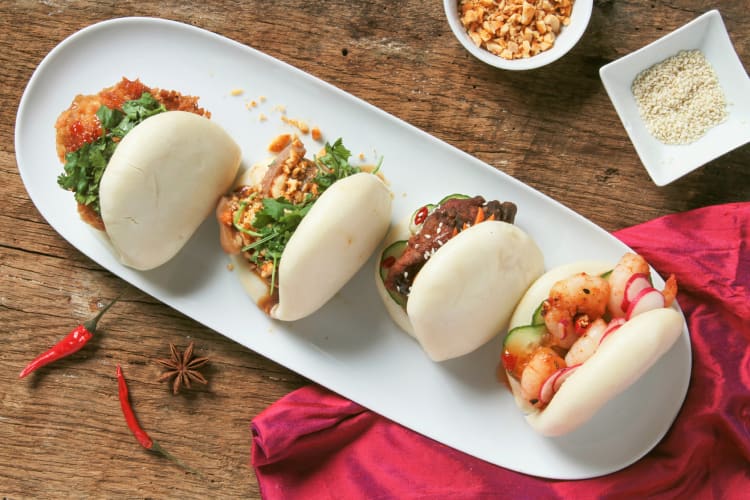
Stuffed doughs, wrappers and breads appear across many Asian cuisines. Fillings may contain meat, seafood, vegetables or sweet pastes, while the outer layer can range from a thin wrapper to a raised bread dough.
There are many ways to cook dumplings: they may be steamed, boiled, pan-fried, deep-fried or baked, depending on the dish. Examples include jiaozi and varieties served at dim sum, Japanese gyoza, Korean mandu, Himalayan momo and Central or West Asian manti. Stuffed pastries such as South Asian samosas belong to a related but distinct category.
Curries, Soups and Stews
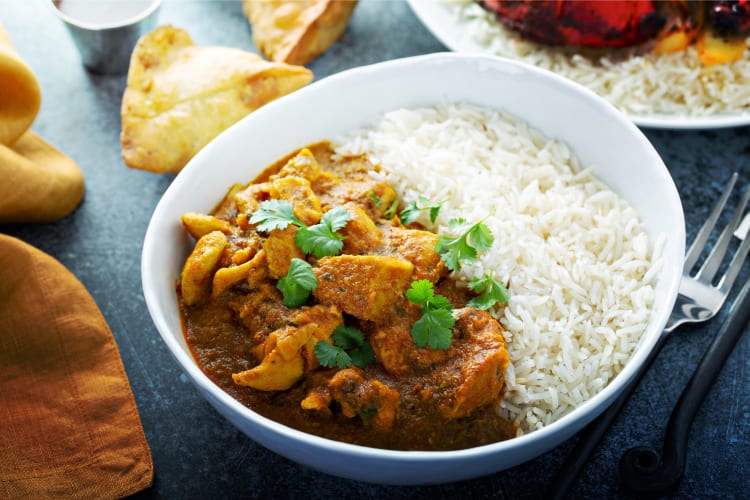
The word “curry” covers many distinct dishes rather than one standardized sauce or spice blend. Japanese curry is typically thick and mildly spiced, while Thai green curry uses a fragrant paste and coconut milk; South Asian curry traditions vary enormously by region. The broader category also includes soups and stews such as Vietnamese pho, Korean jjigae, lentil-based dal and Indonesian rendang, a slowly cooked spiced meat dish.
Barbecue and Grilled Foods
Grilling is common across Asian cuisines, but marinades, equipment, service and accompaniments vary. Korean barbecue often involves cooking meat at the table and serving it with banchan (or side dishes), while Japanese yakitori centers on skewered chicken. Southeast Asian satay, West Asian kebabs and Central Asian shashlik all feature skewered grilled foods, but their seasonings and culinary contexts are distinct. Tabletop grilling and hot-pot dining are also found in several East Asian traditions.
Street Foods and Snacks
Street food offers one of the best ways to see these regional differences. Japanese takoyaki are ball-shaped battered snacks filled with octopus, while lumpia appear in many forms in Filipino street food. Indian street food includes samosas, chaat and numerous regional snacks, and Cambodian street food features dishes such as num pang sandwiches. Thai street food is similarly diverse, ranging from noodle dishes to grilled meats, sweets and fresh fruit.
Asian Desserts and Drinks
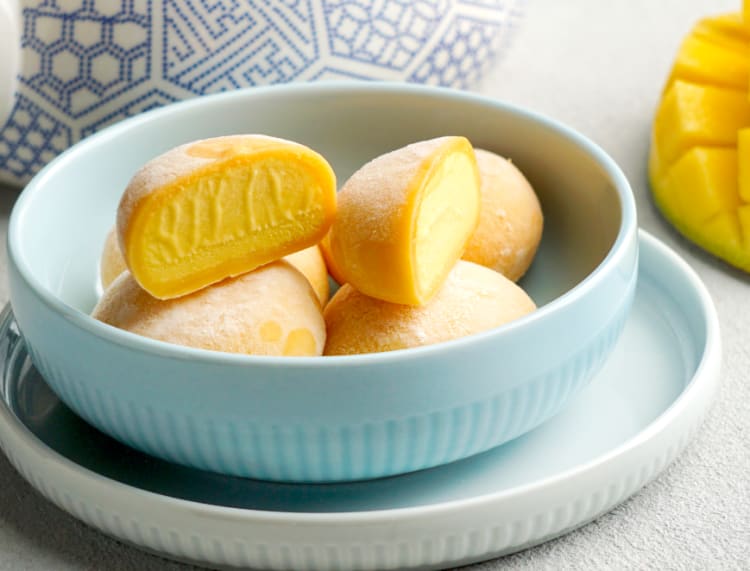
Asian desserts and drinks are just as varied as the continent’s savory foods. Rice, fruit, beans, dairy, coconut, nuts and sugar appear in different combinations, from Japanese mochi and Thai mango sticky rice to South Asian gulab jamun and Taiwanese grass jelly. Bubble tea, which comes in a variety of boba flavors, has also become internationally popular. Rather than assuming these foods are uniformly less sweet than Western desserts, explore the regional range in our guide to Asian desserts.
What Is Pan-Asian Cuisine?
“Pan-Asian” and “Asian fusion” are related restaurant terms, but they don't mean exactly the same thing. Pan-Asian generally refers to a menu that draws from several Asian cuisines, while Asian fusion blends ingredients, techniques or formats from different culinary traditions into a single dish or dining concept.
Asian fusion might combine Korean flavors like gochujang with Mexican tacos or use Thai basil in a dish rooted in Western tradition. The label is not determined simply by using Asian cooking utensils or an ingredient such as glass noodles; it depends on how culinary influences are deliberately combined.
Pan-Asian food is usually defined at the menu level. A restaurant may serve Chinese dumplings, Thai curry, Japanese sushi and dishes inspired by Vietnamese street food without combining those traditions in every plate. Some pan-Asian restaurants also serve fusion dishes, so the terms can overlap in practice.
Neither term should be confused with Asian diaspora cuisines. When communities migrate, food traditions evolve through access to new ingredients, exchange with neighboring cultures and the tastes of new generations. These cuisines are traditions in their own right, not simply altered versions of food from elsewhere. One well-known example is Chinese American orange chicken; Panda Express chef Andy Kao developed the chain’s signature version in 1987.
FAQs About Asian Cuisines
What Counts as Asian Cuisine?
Asian cuisine is an umbrella term for the food traditions associated with countries and communities across East, Southeast, South, Central and West Asia. Examples range from Korean kimbap and dishes featured in our guide to Bangkok street food to Indian biryani and Turkish kebabs. Because the category is so broad, naming the particular country or regional cuisine is often more informative.
What Are the Main Types of Asian Cuisine?
The five broad groupings used in this guide are East Asian, Southeast Asian, South Asian, Central Asian and West Asian cuisine. Each includes many national, regional and community-based food traditions. These categories are useful for orientation, but their boundaries are not fixed and should not be treated as five uniform cuisines.
What Are Some Popular Asian Foods?
Popular Asian foods include sushi, ramen, dumplings, kimchi, bibimbap, pho, pad Thai, adobo, rendang, biryani, dosa, samosas, kebabs and plov. Each dish comes from a particular culinary context, and many have regional variations, so they are best explored through the cuisine with which they are associated.
Is Indian Food Considered Asian Cuisine?
Yes. India is part of South Asia, and Indian cuisine is a major part of the broader category of Asian cuisine. The country contains many distinct regional traditions, so dishes such as biryani, dosa, dal, naan and butter chicken should not be treated as examples of one uniform national style.
Asian cuisine is therefore most useful as a starting point, not a single culinary definition. Breaking the continent down by region reveals both recurring ingredients and techniques and the substantial differences among individual food cultures. Explore a familiar dish in its regional context or choose a cuisine you have not tried before; across Asia, there is always more to discover.
Explore the culinary traditions of Asia through cooking classes, food tours and other foodie experiences on Cozymeal.